Vacuum
What is Vacuum?
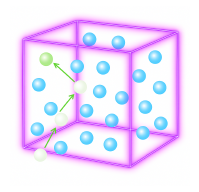
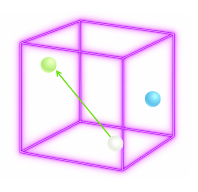
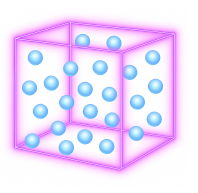
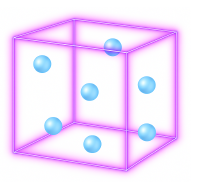
Vacuum is defined as a state of space filled with gas at a pressure (molecular density) lower than atmospheric pressure. For example, there is plenty of air in the places where we live. Although air is invisible, we can sense its presence when we breathe or feel the wind. However, in places like outer space, there is almost no air. Such a space is called as “vacuum.”
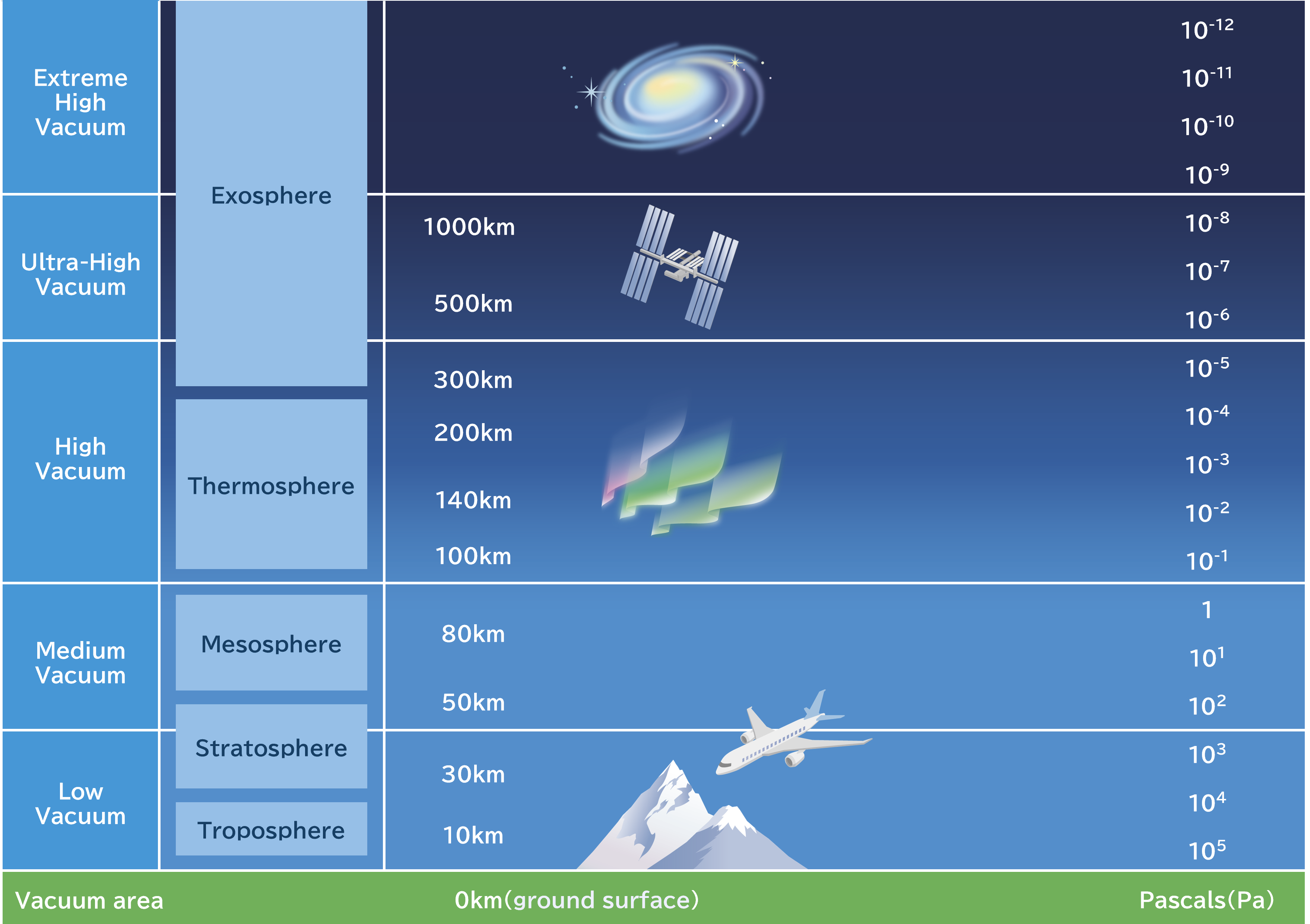
A completely empty space is called “absolute vacuum,” but in reality, achieving it is extremely difficult. Typically, vacuum refers to a state where there is "almost" no gas—an environment with very few air or other particles. Vacuum conditions are classified into five regions based on pressure. At Canon ANELVA, an ultra-high vacuum region of 10⁻⁷ Pa (Pascal) or lower is commonly used.
How to Create Vacuum
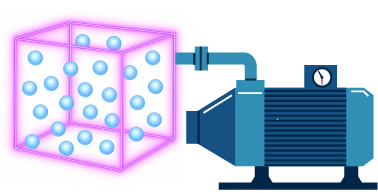
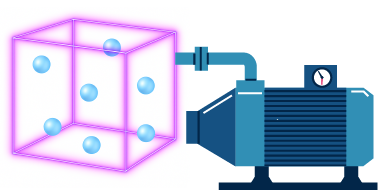
To create a vacuum, it is necessary to physically remove air.
The device used for this purpose is "vacuum pumps".
Dry pumps that mechanically compress and exhaust gas in the low-vacuum range, turbomolecular pumps with high-speed rotating blades that eject molecules in the high-vacuum range, and ion pumps that ionize gas molecules and adsorb them onto metal surfaces in the ultra-high-vacuum range are used.
These pumps lower the pressure inside the chamber by discharging gas molecules.
To maintain a stable vacuum, it is necessary to prevent air leaks and suppress outgassing from the chamber and other components.
Vacuum technology is delicate field that requires precise environmental control.
Applications of Vacuum
Vacuum technology is used in areas close to our daily life.
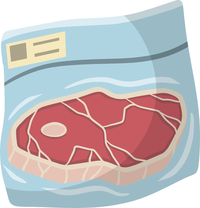
For example, "vacuum packaging" used for food preservation keeps food fresh for longer by removing air to prevent oxidation and bacterial growth.
In semiconductor manufacturing, vacuum environment is required because the impurities in the air can negatively affect the product.
Canon ANELVA’s sputtering equipment uses vacuum so as not the movement of atoms, molecules, and ions being hindered.
Vacuum is an “invisible yet indispensable” technology that supports our daily life and industries.